
Você está na lista de assinantes gratuitos da Newsletter do Ateu Amigável . Se você valoriza o conteúdo e pode contribuir, ficaria muito grato se você se inscrevesse. Apesar de mais de 4.000 erros, o Texas não abandonará seu currículo "Bluebonnet", fortemente baseado na Bíblia.O Conselho de Educação do Texas aprovou milhares de alterações em um currículo que, segundo críticos, promove o cristianismo nas escolas públicas. |
Na semana passada , o Conselho de Educação do Texas votou por 9 a 6 para aprovar milhares de correções, grandes e pequenas, em um currículo de leitura e linguagem aprovado pelo estado para escolas públicas, que críticos há muito consideram inadequado para os alunos e ilegalmente impregnado de cristianismo.
A decisão de financiar essas mudanças é a prova de que até mesmo os funcionários que apoiaram o currículo "Bluebonnet" agora reconhecem que ele não estava pronto para ser implementado com os alunos.
Para entender o que está acontecendo, é preciso voltar a 2023, quando os legisladores republicanos aprovaram o projeto de lei HB 1605, que tinha um custo estimado para o estado de mais de 731 milhões de dólares ao longo de dois anos e que orientava a Agência de Educação do Texas a desenvolver materiais didáticos alinhados aos padrões estaduais.
Em teoria, isso seria um grande benefício para os distritos com poucos recursos, pois eles não precisariam mais comprar livros didáticos separadamente de editoras externas. Embora as escolas públicas não fossem obrigadas a usar esse material, pelo menos teriam essa opção.
Mas o estado também ofereceu um incentivo aos distritos: daremos até 60 dólares por aluno se vocês utilizarem nossos recursos . Seria muito difícil para os distritos de baixa renda recusarem essa oferta.
Se essa foi ou não uma boa utilização do dinheiro público era algo discutível. Os críticos argumentavam que o dinheiro teria sido melhor investido no aumento dos salários dos professores, a fim de atrair melhores educadores para a área. De qualquer forma, mais tarde naquele ano, o Conselho Estadual de Educação publicou versões preliminares do novo material online — incluindo o material de Língua Inglesa e Leitura para alunos da Educação Infantil ao 5º ano — para que o público pudesse dar sua opinião antes da versão final.
Uma das principais conclusões? Esse material estava repleto de cristianismo.
 |
Segundo o The 74 , um veículo de comunicação especializado em educação, isso ocorreu em grande parte porque grupos de direita desempenharam um papel significativo no desenvolvimento do currículo:
Embora em grande parte mantida em segredo do público, a reformulação gerou debates nos bastidores muito antes de seu lançamento. Quando uma importante editora de currículos se recusou a atender ao pedido do estado para incluir conteúdo bíblico em seus materiais, as autoridades do Texas recorreram a outros fornecedores. Entre eles, a conservadora faculdade cristã Hillsdale College, em Michigan, e a Fundação de Políticas Públicas do Texas, de tendência conservadora , que apoiou uma iniciativa malsucedida para tornar obrigatório o ensino dos Dez Mandamentos em todas as salas de aula, segundo uma lista obtida pelo The 74.
Então, quão ruim tudo ficou?
Esses foram apenas dois exemplos de como os conservadores incorporaram a Bíblia ao material de uma forma que lhes permitiu alegar uma negação plausível quando acusados de violar a separação entre Igreja e Estado.
O material para os alunos do 5º ano incluía uma unidade sobre “Juneteenth e Além”, onde os alunos deveriam ler a “ Carta da Cadeia de Birmingham ”, de Martin Luther King Jr. King escreveu a agora famosa carta após ser preso durante um protesto pacífico e depois que vários membros do clero branco instaram os afro-americanos a terem paciência e lutarem contra o racismo nos tribunais.
King respondeu: “Há anos que ouço a palavra 'esperar'. Ela ressoa nos ouvidos de todo negro com uma familiaridade penetrante. Essa 'esperar' quase sempre significou 'nunca'”. Ele também citou a frase: “justiça tardia demais é justiça negada”. No meio da carta, ele disse que sua forma de protesto não era exatamente uma abordagem nova:
É claro que esse tipo de desobediência civil não é novidade. Ela foi exemplificada de forma sublime na recusa de Sadraque, Mesaque e Abednego em obedecer às leis de Nabucodonosor, pois uma lei moral superior estava em jogo. Foi praticada de maneira magnífica pelos primeiros cristãos, que estavam dispostos a enfrentar leões famintos e a dor excruciante de serem esquartejados antes de se submeterem a certas leis injustas do Império Romano. Em certa medida, a liberdade acadêmica é uma realidade hoje porque Sócrates praticou a desobediência civil.
No livro de Daniel, os personagens Sadraque, Mesaque e Abednego foram lançados numa fornalha porque não se curvaram diante de uma imagem do rei da Babilônia, Nabucodonosor II. Mas quando o rei olhou para vê-los sendo queimados, notou quatro figuras... uma das quais parecia ser "semelhante a um filho de Deus". Os outros três homens saíram ilesos.
Qual a importância dessas referências bíblicas na carta de King? Nenhuma. Elas foram apenas uma das muitas alusões feitas ao longo do texto. O artigo da Wikipédia sobre a carta sequer as menciona uma vez. Quando se fala da carta de King, esses personagens bíblicos não são citados porque o contexto geral do que King está dizendo é muito mais importante.
Mas não para os responsáveis pela elaboração dos currículos no Texas. Eles viram uma oportunidade.
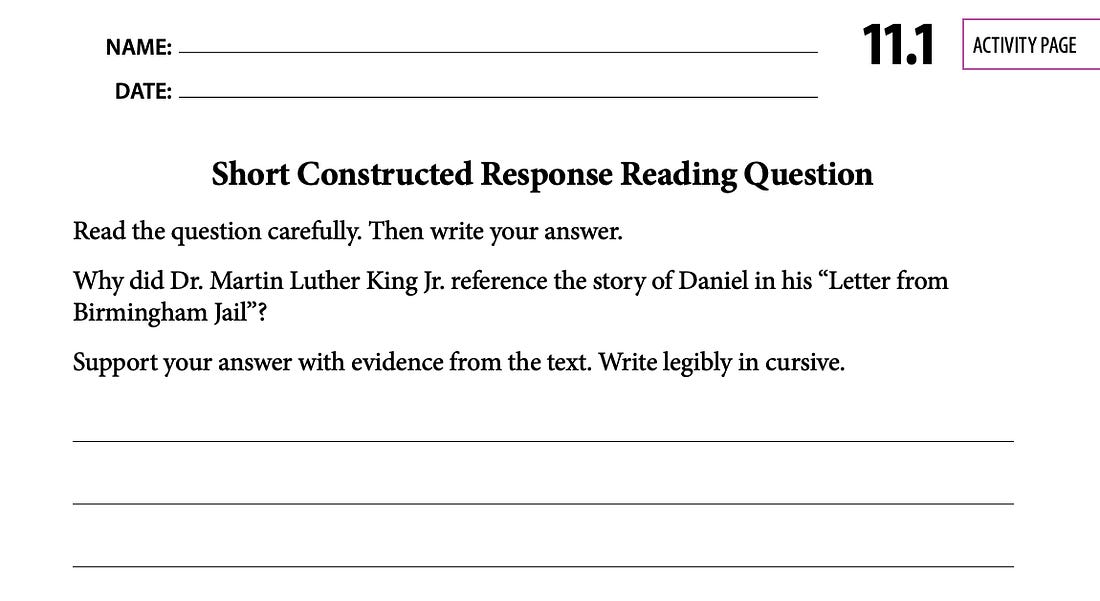
No livro de atividades para alunos que acompanha esta unidade, as crianças são convidadas a escrever uma breve resposta à pergunta: "Por que o Dr. Martin Luther King Jr. fez referência à história de Daniel em sua 'Carta da Cadeia de Birmingham'?"
 |
Eles poderiam ter feito inúmeras perguntas semelhantes: Por que King citou Sócrates e Aristóteles ? Por que King mencionou o caso Brown v. Board of Education ? Por que King mencionou Thomas Jefferson e Abraham Lincoln ? Em vez disso, a principal lição para os cristãos que escreveram esse currículo foi garantir que as crianças entendessem a referência bíblica .
Claro, entender a história bíblica ajuda a compreender o que King está dizendo naquela única frase , mas não é imprescindível. Mesmo assim, o comissário de educação do Texas, Mike Morath, considerou isso vital .
“Se você não sabe quem foi Nabucodonosor, você não sabe do que [King] está falando”, disse Morath. “Como você garante que consegue despertar na mente de nossas crianças a capacidade de lidar com… ideias que surgiram em grandes obras da literatura?”
Você certamente conseguiria entender o que King estava dizendo sem conhecer essa referência bíblica.
Mas dava para perceber o que eles estavam fazendo aqui. Usaram uma referência menor à Bíblia e a ampliaram para centralizá- la em uma discussão sobre King.
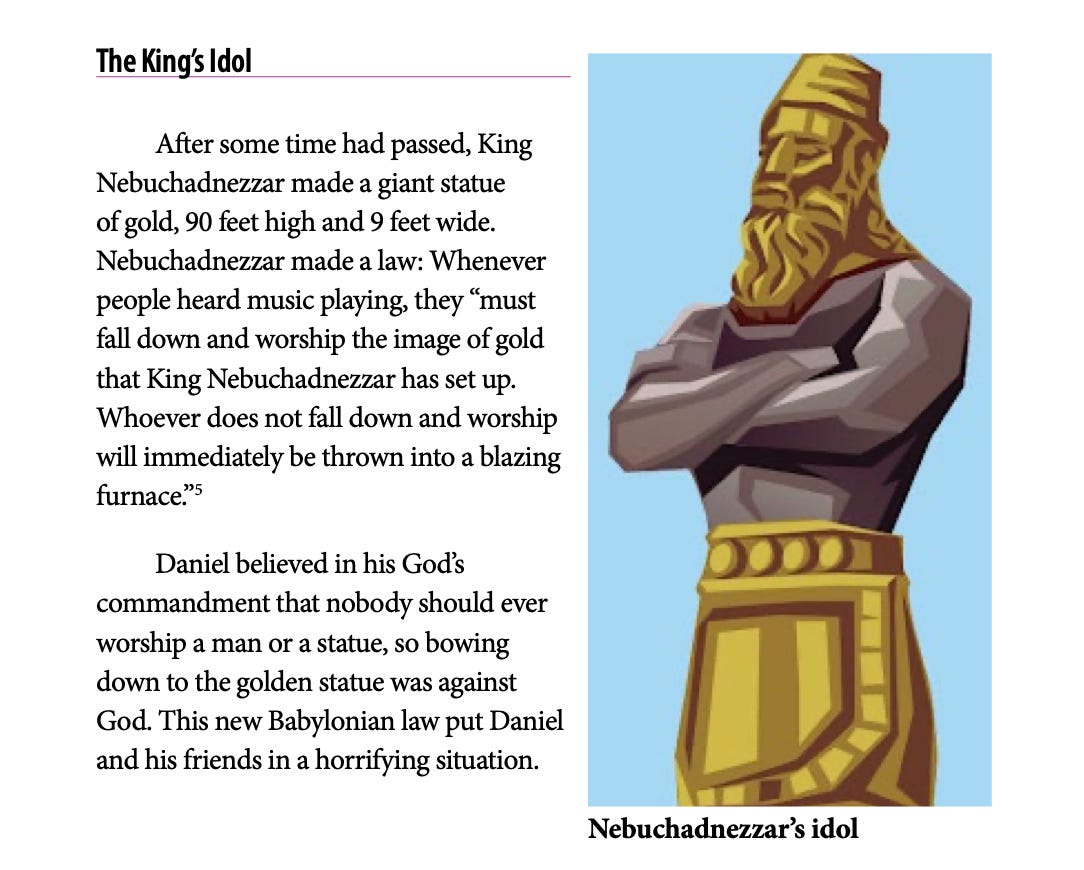
Um documento separado, fornecido por autoridades estaduais, incluía um relato extenso da história bíblica para reforçar a mensagem que os cristãos conservadores queriam que as crianças assimilassem dessa unidade: "Para entender King, é preciso também entender suas referências religiosas".
Não passou de um sermão de Escola Dominical inserido em uma unidade sobre Martin Luther King Jr. O que poderia ter sido explicado em um único parágrafo (como fiz acima) foi expandido para seis páginas de narrativa bíblica.
 |
Além disso, nada em toda a unidade, pelo que pude perceber, sugeria que muitos racistas foram inspirados por sua fé cristã a manter a segregação. Em vez disso, os alunos foram informados apenas de que “muitos líderes do movimento pelos direitos civis foram motivados por sua fé cristã”. Isso é verdade, mas definitivamente não é toda a história, e omitir o outro lado ignora um ponto muito importante.
Esse foi apenas um exemplo. Aqui vai outro.
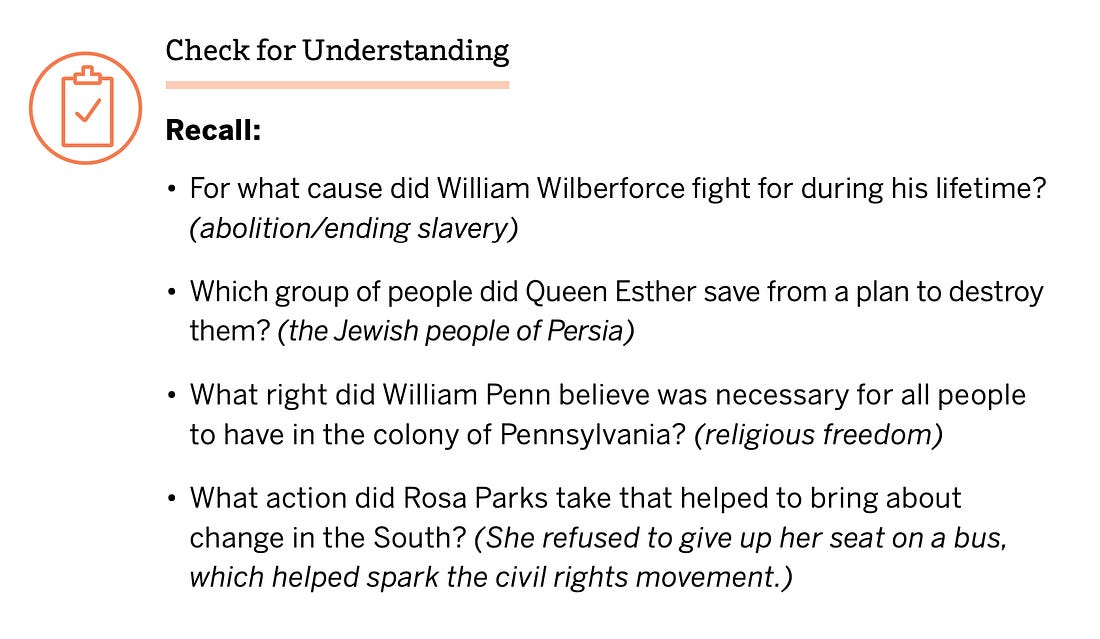
Uma aula do 2º ano sobre "Lutar por uma Causa" apresentou aos alunos "pessoas comuns que defenderam aquilo em que acreditavam e que lutaram por uma causa, mesmo enfrentando dificuldades imensuráveis". Isso soou maravilhoso! Os líderes mencionados na unidade incluíam Jackie Robinson , Dolores Huerta , Rosa Parks ... e a personagem bíblica Rainha Ester.
A Bíblia diz que Ester salvou o povo judeu ao frustrar um plano para exterminá-lo, e é por isso que ela foi incluída nesta unidade... mas, ao contrário de todos os outros, não havia nenhuma evidência de que ela realmente existiu. Os alunos nunca foram informados disso. Sua história recebeu o mesmo tratamento que a de Rosa Parks, que se recusou a ceder seu lugar no ônibus:
 |
Mas não parou por aí. No pacote de imagens que seria usado na unidade, havia fotos reais de lutadores pela liberdade como o Dr. Héctor P. Garcia e Cesar Chavez. E havia pinturas de figuras históricas como William Penn e William Wilberforce . Esther, que na verdade não existiu, recebeu um tratamento semelhante. Aliás, subentende-se que sabemos como ela era porque aqui está ela :
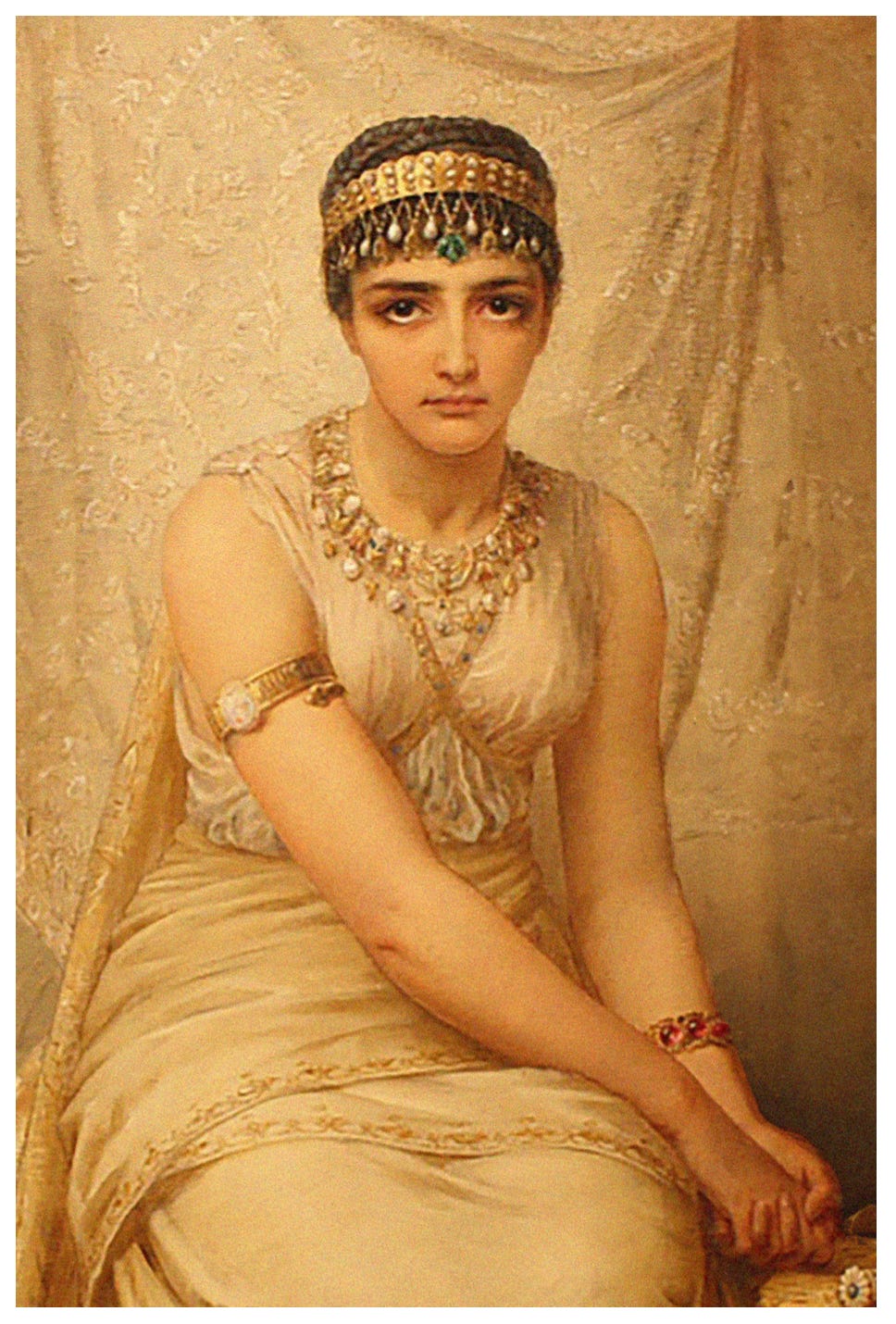 |
As anotações da professora nunca mencionaram que essa imagem, recortada de uma pintura de 1878 de Edwin Long , não era resultado de uma sessão de retratos , mas sim criada do nada, porque ela não era real . As anotações continuavam dizendo que a Bíblia descrevia Ester como alguém “que foi escolhida pelo rei da Pérsia para ser rainha”... como se a menção dela na Bíblia comprovasse isso.
 |
Você entendeu a ideia. Ao longo dessas aulas, o cristianismo era tratado como um fato. Os personagens bíblicos não eram mencionados como personagens , mas sim como pessoas reais da história. E sempre que a fé podia ser inserida em uma lição, ela era.
Há um argumento muito válido a favor do ensino da Bíblia para crianças em nome da alfabetização cultural. Sem conhecer a história de Adão e Eva e o Jardim do Éden, por exemplo, pode-se perder muitas referências presentes na literatura, na arte e na cultura pop. Mas se esse é o objetivo, então é imprescindível dizer aos alunos que a Bíblia é uma obra de ficção — ou pelo menos tratá-la objetivamente, em vez de como um fato histórico . Seria importante, portanto, focar principalmente nas principais histórias bíblicas e não em personagens secundários apenas para contar suas histórias.
Um professor que falou com o The 74 expressou exatamente essa preocupação:
“É razoável dedicar alguma atenção à [Bíblia], e os padrões educacionais estaduais em todo o país frequentemente exigem essa atenção”, disse Mark Chancey, professor de estudos religiosos na Southern Methodist University, em Dallas. “O problema, claro, é que às vezes a razão legítima da alfabetização cultural é usada como cortina de fumaça para esconder agendas religiosas e ideológicas.”
Era isso que víamos aqui, repetidamente: uma agenda religiosa disfarçada de educação abrangente. Para piorar, uma unidade didática de poesia para alunos do quinto ano incluía poemas de Robert Frost e William Carlos Williams e… o Livro dos Salmos. A CNN noticiou : “Nenhum outro texto de livros religiosos seria incluído na unidade”.
Isso também foi resultado de reclamações de pais conservadores que, segundo o The 74, afirmaram que o currículo anterior oferecido pela empresa Amplify enfatizava a mitologia em detrimento do cristianismo. (Aparentemente, a ironia passou despercebida por eles.)
Autoridades estaduais pediram à Amplify que fornecesse uma aula sobre a história de Ester e sugeriram uma unidade sobre o Êxodo , disse Alexandra Walsh, diretora de produtos da empresa.
Embora já tivesse adaptado seu currículo para outros estados, Walsh afirmou que a empresa nunca havia sido solicitada a adicionar material bíblico. E quando sugeriu a inclusão de conteúdo de outras religiões mundiais, o estado rejeitou a ideia , disse a porta-voz da Amplify, Kristine Frech.
“Não havia muito interesse em uma variedade de textos sapienciais”, disse ela. “Havia muito mais interesse na ligação com os textos cristãos tradicionais.”
Então o Texas abandonou o Amplify e começou a trabalhar com grupos de direita como a Texas Public Policy Foundation e Hillsdale. E foi isso que eles desenvolveram.
Curiosamente, o jornal The 74 destacou que o Texas já oferecia aos alunos do ensino médio cursos eletivos sobre a Bíblia. Esses cursos também seriam legais, desde que fossem ministrados de forma objetiva (o que não acontece ). Mas o fato é que essas aulas eram extremamente impopulares. "Pouco mais de 1.200 dos 1,7 milhão de alunos do ensino médio do estado fizeram o curso este ano", dizia o artigo.
Como esse plano de doutrinação dos alunos não funcionou, os legisladores do Texas procuravam outra maneira de fazê-lo e, desta vez, em vez de esperar que os alunos do ensino médio escolhessem uma aula sobre a Bíblia, eles inseriram a Bíblia em todo o currículo do ensino fundamental.
O novo currículo baseado na Bíblia — conhecido como currículo " Bluebonnet Learning " — acabou sendo adotado. (Não foi um bom sinal que uma das empresas que contribuíram para o novo material tenha sido fundada por Mike Huckabee .)
E qual foi o grau de popularidade do novo currículo?
Já sabíamos que os distritos mais pobres seriam obrigados a usá-lo para economizar dinheiro, e foi exatamente o que aconteceu. De acordo com o Texas Tribune , aproximadamente 300 escolas públicas e charter, representando cerca de 25% dos distritos escolares públicos do estado, disseram que esperavam usar o currículo Bluebonnet.
O jornal Tribune obteve dados por meio de um pedido de acesso à informação sobre as escolas que planejam usar o novo currículo Bluebonnet da Agência de Educação do Texas, que inclui lições de leitura com enfoque religioso, além de materiais de fonética e matemática.
De acordo com os dados, cerca de 595 distritos e escolas charter se inscreveram até o final de junho para usar pelo menos algumas partes do currículo, e cerca de 317 disseram que usariam as aulas de leitura .
O lado positivo disso tudo foi que muitos desses distritos escolares admitiram abertamente que estavam fazendo isso por causa dos benefícios financeiros, para se adequarem aos padrões estaduais e para evitar as consequências mais severas caso seus alunos não tivessem o desempenho esperado nos testes padronizados. Eles não estavam adotando o currículo por causa da influência do cristianismo. Dito isso, não sabíamos como (ou mesmo se!) eles ensinariam as lições com mensagens religiosas.
Mais de um distrito, no entanto, afirmou que pularia as seções de leitura nas lições do programa Bluebonnet porque elas simplesmente não estavam no nível necessário:
Sandy Denning, superintendente adjunta responsável pelo currículo do Distrito Escolar Independente de Keene, disse ao Tribune que os materiais de leitura da Bluebonnet atualmente não atendem ao nível de rigor desejado pelo distrito. Ela não apontou nenhuma parte específica, mas descreveu o problema como "generalizado".
Quando se pede a fanáticos religiosos que elaborem um currículo de leitura, não devemos nos surpreender que eles o simplifiquem tanto que educadores experientes se recusem a perder tempo com seus alunos.
Agora se sabe que os problemas com o currículo eram muito mais extensos do que qualquer um imaginava: o número de correções que precisam ser feitas ultrapassa 4.000 , embora um porta-voz tenha dito que é significativamente menor.
Membros do conselho disseram que mais de 4.000 correções eram necessárias. Mas Jake Kobersky, porta-voz da agência de educação do Texas, disse à Associated Press que aproximadamente 1.900 alterações foram feitas e que esse número inclui correções duplicadas no guia do professor, no livro de exercícios do aluno e em outros documentos.
Kobersky afirmou que a maioria das mudanças foram “proativas, em resposta ao feedback dos professores ou a correções gramaticais, e não resultado de erros factuais”.
(É possível ver a discussão sobre o currículo durante a reunião de janeiro por volta dos 2:20:00. A votação para aprovar as mudanças ocorreu rapidamente durante a reunião seguinte, em 25 de fevereiro.)
Algumas das correções envolvem erros de pontuação e formatação, além da substituição de imagens que nunca deveriam ter sido incluídas devido a problemas de direitos autorais e licenciamento. Alguns problemas incluíam gabaritos incorretos , páginas faltando e livros que estavam se desfazendo devido à má qualidade do material. Sabe o que não será corrigido? Todas as referências cristãs. Elas permanecerão intactas.
“Que desperdício do dinheiro dos contribuintes!”, dizia uma reclamação enviada à Agência de Educação do Texas. “Este desastre dobrou a carga de trabalho dos meus professores e, como administrador que reconhecia o valor de um currículo alinhado, estou envergonhado.”
O Conselho de Educação argumenta que esse tipo de coisa acontece o tempo todo . Calma, pessoal, são só algumas vírgulas aqui e ali .
Jake Kobersky, porta-voz da Agência de Educação do Texas, disse à Associated Press que foram feitas aproximadamente 1.900 alterações e que esse número inclui correções duplicadas no guia do professor, no livro de exercícios do aluno e em outros documentos.
Kobersky afirmou que a maioria das mudanças foram “proativas, em resposta ao feedback dos professores ou a correções gramaticais, e não resultado de erros factuais”.
A maioria das alterações não eram erros factuais. Mas isso significa que algumas, aparentemente, eram.
Mais importante ainda, uma resposta errada no gabarito pode levar as crianças na direção errada. Será que alguém que criou esse currículo se deu ao trabalho de revisar o próprio trabalho? Quando as editoras submetem seus materiais para aprovação, elas assinam declarações juramentadas atestando que fizeram isso! O que, neste caso, significa que deixaram passar vários erros!
O Texas Tribune apresentou outro número apenas como referência:
Para efeito de comparação, outras quatro editoras que enviaram pedidos de correção relataram um total de 16 edições .
Ah. Acontece que, quando se tem profissionais trabalhando nesse tipo de coisa, os erros são mínimos. Quando se tem fanáticos religiosos se passando por profissionais, o resultado é a qualidade de um filme cristão: a tentativa de copiar a coisa real sempre resulta em um produto muito inferior.
Era isso que preocupava um membro democrata do conselho:
A conselheira democrata Tiffany Clark afirmou que o conselho e a agência de educação prejudicaram os alunos ao permitirem que as escolas ensinassem materiais falhos.
“Se eles vêm usando este produto por acreditarem que se trata de um material didático de alta qualidade, então, mais uma vez, falhamos com nossos alunos neste ano letivo”, disse Clark.
Não seria a primeira vez que os ideólogos do Texas decepcionam os estudantes.
O mais decepcionante em tudo isso é a previsibilidade do resultado. O currículo da Bluebonnet Learning foi vendido aos distritos escolares como uma solução econômica e alinhada aos padrões para distritos com dificuldades. Desde então, tornou-se um experimento financiado pelo contribuinte em revisionismo cristão — tão mal executado que agora exige milhares de correções antes de atingir qualquer funcionalidade básica. Isso é sinal de incompetência, não de erro humano justificável.
E mesmo quando as correções forem feitas, problemas maiores persistirão. É possível corrigir a pontuação e trocar uma imagem. O que eles não podem (e não vão) corrigir é a ideia de que as aulas de leitura nas escolas públicas devam normalizar uma religião como fato histórico e padrão cultural. Esse continua sendo o maior escândalo.
A votação do Conselho para corrigir os erros equivale a admitir que o produto que aprovaram foi feito às pressas e inadequado para uso em sala de aula. Os maiores problemas continuam sendo aqueles que se recusam a corrigir. E ainda não sabemos quanto custará consertar tudo isso.
A educação pública deveria exigir neutralidade, competência e honestidade intelectual. Esta saga revela um conselho dominado por republicanos que está disposto a sacrificar os três em busca de uma agenda religiosa, e depois agir como se não fosse nada demais quando todos começam a apontar erros gritantes. Eles desperdiçaram a confiança de milhões de alunos e professores. Quanto mais tempo esse currículo permanecer em vigor, mais confiança eles perderão.
(Partes deste artigo foram publicadas anteriormente)
Despite 4,000+ errors, Texas won’t abandon its Bible-heavy "Bluebonnet" curriculum
The Texas Board of Education approved thousands of fixes to a curriculum critics say promotes Christianity in public schools
The Texas Board of Education voted 9-6 last week to approve thousands of fixes, large and small, to a state-approved reading and language arts curriculum for public schools that critics have long said is subpar for students and illegally infused with Christianity.
The decision to pay for those changes is proof that even the officials who supported the “Bluebonnet” curriculum now acknowledge it wasn’t ready to put in front of students.
To make sense of what’s happening, you have to go back to 2023, when Republican lawmakers passed HB 1605, a bill projected to cost the state more than $731 million over two years that directed the Texas Education Agency to develop instructional materials that aligned with state standards.
This would, in theory, be a huge benefit for cash-strapped districts because they wouldn’t have to purchase separate textbooks from outside companies anymore. While public schools wouldn’t be forced to use this material, they would at least have that option.
But the state also dangled a carrot in front of districts: We’ll give you up to $60 per student if you use our resources. It would be very hard for low-income districts to pass that up.
Whether or not this was a good use of state dollars was up for debate. Critics said the money would have been better spent on raising teachers’ salaries in order to attract better educators to the field. In any case, later that year, the State Board of Education posted drafts of the new material online—including the English Language Arts and Reading material for students in Kindergarten through Grade 5—so that the public could weigh in before the material was finalized.
One of the big takeaways? This material was riddled with Christianity.
|
According to The 74, an outlet that covers education, this was largely because right-wing groups played a significant role in developing the curriculum:
While largely hidden from public view, the redesign sparked behind-the-scenes debate long before its release. When a leading curriculum publisher balked at the state’s request to infuse its offerings with biblical content, Texas officials turned to other vendors. They include conservative Christian Hillsdale College in Michigan and the right-leaning Texas Public Policy Foundation, which supported an unsuccessful effort to require the 10 Commandments in every classroom, according to a list obtained by The 74.
So how bad did it all get?
Here were just two examples of how conservatives worked the Bible into the material in a way that allowed them to claim plausible deniability when accused of violating church/state separation.
The material for 5th graders included a unit on “Juneteenth and Beyond” where students were supposed to read Martin Luther King Jr.’s “Letter from Birmingham Jail.” King wrote the now-famous letter after he was arrested during a non-violent protest and after several white clergy members urged Black Americans to just be patient and fight racism through the courts.
King responded, “For years now I have heard the word ‘wait.’ It rings in the ear of every Negro with a piercing familiarity. This ‘wait’ has almost always meant ‘never.’” He also quoted the line, “justice too long delayed is justice denied.” In the middle of the letter, he said that his form of protest was hardly a new approach:
Of course, there is nothing new about this kind of civil disobedience. It was seen sublimely in the refusal of Shadrach, Meshach, and Abednego to obey the laws of Nebuchadnezzar because a higher moral law was involved. It was practiced superbly by the early Christians, who were willing to face hungry lions and the excruciating pain of chopping blocks before submitting to certain unjust laws of the Roman Empire. To a degree, academic freedom is a reality today because Socrates practiced civil disobedience.
In the Book of Daniel, the characters Shadrach, Meshach, and Abednego were thrown into a furnace because they weren’t bowing down to an image of the King of Babylon, Nebuchadnezzar II. But when the king looked to see them burned up, he noticed four figures… one of whom appeared to be “like a son of God.” The three other men were unharmed.
How significant were those biblical references in the King letter? Not significant at all. They were just one of many, many allusions made throughout the piece. The Wikipedia article for the letter doesn’t even mention them once. When people talk about King’s letter, those biblical characters do not come up because the bigger picture of what King is saying is so much more important.
But not to the curriculum writers in Texas. They saw an opening.
In the student activity book accompanying this unit, kids are asked to write a short response to the question, “Why did Dr. Martin Luther King Jr. reference the story of Daniel in his ‘Letter from Birmingham Jail’?”
|
They could have asked any number of similar questions: Why did King reference Socrates and Aristotle? Why did King bring up Brown v. Board of Education? Why did King mention Thomas Jefferson and Abraham Lincoln? Instead, the big takeaway for the Christians writing this curriculum was to make sure kids understood the biblical reference.
Sure, understanding the Bible story helps make sense of what King is saying in that single sentence, but it’s hardly necessary. And yet Texas education Commissioner Mike Morath felt it was vital:
“If you don’t know who Nebuchadnezzar is, you don’t know what [King’s] talking about,” Morath said. “How do you make sure that you can unlock in the minds of our kids their ability to wrestle with … ideas that have surfaced in great works of literature?”
You could absolutely figure out what King was saying without knowing that Bible reference.
But you could see what they were doing here. They used a minor reference to the Bible and blew it up in order to centralize it within a discussion of King.
A separate document provided by state officials included a lengthy account of the Bible story in order to hammer home the point conservative Christians wanted kids to take away from this unit: “To understand King, one must also understand his religious references.”
It was nothing more than a Sunday School sermon wedged into a unit about King. What could have been explained in a single paragraph (as I did above) was expanded into six pages of Bible storytelling.
|
In addition to that, nothing in the entire unit, as far as I could tell, suggested that many racists were inspired by their Christian faith to maintain segregation. Instead, students were only told that “many leaders of the civil rights movement were motivated by their Christian faith.” That’s true, but it’s definitely not the entire story, and leaving out the other side ignores a very salient point.
That was just one example. Here’s another.
A 2nd Grade lesson about “Fighting for the Cause” introduced students to “ordinary people who stood up for what they believed in and who fought for a cause, even when faced with immeasurable odds.” That sounded wonderful! The leaders mentioned in the unit included Jackie Robinson, Dolores Huerta, Rosa Parks… and the biblical character Queen Esther.
The Bible said Esther saved the Jewish people by foiling a plot to eradicate them, which is why she was included in this unit… but unlike everyone else, there was no evidence she ever actually existed. Students were never told that. Her story was given the same treatment as the one of Rosa Parks refusing to give up her seat on a bus:
|
It didn’t stop there. In the packet of images meant to be used in the unit, there were actual pictures of freedom fighters like Dr. Héctor P. Garcia and Cesar Chavez. And there were paintings of historical figures William Penn and William Wilberforce. Esther, who didn’t actually exist, received a similar treatment. In fact, it was implied we know what she looked like because here she is:
|
The teacher’s notes never mentioned that this image, clipped from an 1878 painting by Edwin Long, was not the result of a portrait session but rather conjured up out of thin air because she wasn’t real. The notes went on to say the Bible described Esther as someone “who was chosen by the king of Persia to be queen”… as if her mention in the Bible proved it.
|
You get the idea. Throughout these lessons, Christianity was treated as fact. The Bible’s characters were not referred to as characters but rather as real people in history. And whenever the faith could be shoved into a lesson, it was.
There’s a very good argument that could be made for teaching children about the Bible in the name of cultural literacy. Without knowing the story of Adam and Eve and the Garden of Eden, for example, you may miss out on a lot of references made in literature, art, and pop culture. But if that’s the goal, then it’s imperative to tell students the Bible is a work of fiction—or at least to treat it objectively instead of as historical fact. It would also be important, then, to focus primarily on the biggest Bible stories and not B-plot characters just for the sake of telling their stories.
One professor who spoke to The 74 expressed that very concern:
“It is reasonable to devote some attention to [the Bible], and state education standards across the nation often require such attention,” said Mark Chancey, a religious studies professor at Southern Methodist University in Dallas. “The problem, of course, is that sometimes the legitimate reason of cultural literacy is used as a smokescreen to hide religious and ideological agendas.”
That’s what we were seeing here, over and over: a religious agenda masquerading as broad-based education. Hell, a poetry unit for fifth graders included poems by Robert Frost and William Carlos Williams and… The Book of Psalms. CNN reported, “No other texts from religious books would be included in the unit.”
This was also the result of complaints from conservative parents who, according to The 74, said the previous curriculum offered by the company Amplify emphasized mythology over Christianity. (The irony was apparently lost on them.)
State officials asked Amplify to provide a lesson on the story of Esther and suggested a unit on Exodus, said Alexandra Walsh, the company’s chief product officer.
While it had previously tweaked its curriculum for other states, Walsh said the company had never been asked to add biblical material. And when it suggested inserting content from other world religions, the state rejected the idea, said Amplify spokeswoman Kristine Frech.
“There was not much appetite for a variety of wisdom texts,” she said. “There was much more of an appetite for the tie to traditional Christian texts.”
So Texas ditched Amplify and began working with right-wing groups like the Texas Public Policy Foundation and Hillsdale. And this is what they developed.
Interestingly enough, The 74 pointed out that Texas was already offering high school students elective courses on the Bible. Those, too, would be legal as long as they were taught objectively (which they are not). But here’s the thing: Those classes were extremely unpopular. “Just over 1,200 of the state’s 1.7 million high school students took the course this year,” the article said.
Since that plan to indoctrinate students didn’t work, Texas lawmakers were looking for another way to do it, and this time, instead of waiting for high school students to choose a class on the Bible, they shoved the Bible into an entire elementary-level curriculum.
The new Bible-infused curriculum—known as the “Bluebonnet Learning“ curriculum—was eventually adopted. (It wasn’t a good sign that one of the companies contributing to the new material was founded by Mike Huckabee.)
And how popular was the new curriculum?
We already knew poorer districts would be compelled to use it to save money, and that’s indeed how it played out. According to the Texas Tribune, roughly 300 public and charter schools, representing about 25% of public school districts in the state, said they expected to use the Bluebonnet curriculum.
The Tribune obtained data through an open records request on the schools planning to use the [Texas Education Agency’s] new Bluebonnet curriculum, which includes the religion-infused reading lessons as well as phonics and math materials.
According to the data, about 595 districts and charters signed up as of late June to use at least some parts of the curriculum, and about 317 said they would use the reading lessons.
The silver lining here was that many of those school districts openly admitted they were doing this because of the financial perks, to align with state standards, and to avoid the most severe repercussions if their students didn’t perform as needed on standardized tests. They weren’t adopting the curriculum because of the infusion of Christianity. That said, we didn’t know how (or even if!) they would teach the lessons with religious messaging.
More than one district, however, said they would skip the reading sections in the Bluebonnet lessons because they just weren’t at the level they needed to be:
Sandy Denning, an associate superintendent who oversees curriculum for the Keene Independent School District, told the Tribune that Bluebonnet’s reading materials currently do not meet the level of rigor the district wants. She did not point to any specific parts but described the problem as “across the board.”
When you ask religious zealots to craft a reading curriculum, we shouldn’t be surprised that they dumb it down so much that veteran educators refuse to waste their students’ time with it.
It now turns out that the problems with the curriculum were far more extensive than anyone imagined: The number of corrections that need to be made amount to well over 4,000, though one spokesperson said it’s significantly fewer.
Board members said more than 4,000 corrections were needed. But Jake Kobersky, spokesperson for the Texas education agency, told the Associated Press that approximately 1,900 changes were made and that the figure includes duplicate corrections in the teacher guide, student workbook and other documents.
Kobersky said most changes were “proactive in response to teacher feedback or grammatical fixes, not a result of factual errors”.
(You can see discussion of the curriculum during the January meeting around the 2:20:00 mark. The vote to approve the changes occurred quickly during the following meeting on February 25.)
Some of the corrections involve punctuation, and formatting mistakes, and replacing images that never should have been included due to copyright and licensing issues. Some problems involved incorrect answer keys, and missing pages, and books that were falling apart due to shoddy material. You know what’s not going to be fixed? All the Christian references. Those will remain in place.
“What a waste of taxpayer dollars!” read one complaint to the Texas Education Agency. “This disaster has doubled the workload on my teachers, and as an administrator who saw the value in an aligned curriculum, I am embarrassed.”
The Board of Education is arguing that this sort of thing happens all the time. Relax, people, it’s just a few commas here and there.
Jake Kobersky, spokesperson for the Texas Education Agency, told The Associated Press that approximately 1,900 changes were made and that the figure includes duplicate corrections in the teacher guide, student workbook and other documents.
Kobersky said most changes were “proactive in response to teacher feedback or grammatical fixes, not a result of factual errors.”
Most changes were not factual errors. But that means some, apparently, were.
More importantly, a wrong answer in a key could steer kids in the wrong direction. Did anyone creating this curriculum bother to double check their work? When publishers submit their material for approval, they sign affidavits attesting that they have done that! Which, in this case, means they failed to notice the errors many times over!
The Texas Tribune offered another number just as a benchmark:
For comparison, four other publishers that submitted correction requests reported a combined 16 edits.
Oh. Turns out when you have professionals working on this sort of thing, errors are minimal. When you have religious zealots cosplaying as professionals, you get all the quality of a Christian movie: Their attempt to copy the real thing always results in a far inferior product.
That’s what one Democratic member of the board was worried about:
Democratic board member Tiffany Clark said the board and the education agency harmed students by allowing schools to teach flawed materials.
“If this is a product they’ve been using because they believe it was a high-quality instructional material, again, we have failed our students this school year,” Clark said.
It wouldn’t be the first time Texas ideologues have failed students.
What’s most disappointing about this is how predictable it all was. The Bluebonnet Learning curriculum was sold to districts as a cost-saving, standards-aligned solution for struggling districts. It has since become a taxpayer-funded experiment in Christian revisionism—one so poorly executed that it now requires thousands of corrections before it can have even basic functionality. That’s a sign of incompetence, not excusable human error.
And even when the corrections are made, bigger problems will remain. You can fix punctuation and swap out an image. What they can’t (and won’t) fix is the idea that public school reading lessons should normalize one religion as historical fact and cultural default. That remains the biggest scandal.
The Board’s vote to fix the mistakes amounts to an admission that the product they approved were rushed and unfit for classrooms. The biggest problems remain the ones they refuse to fix. And we still don’t know how much it’ll cost to fix all this.
Public education ought to require neutrality, competence, and intellectual honesty. This saga reveals a Republican-dominated board that’s willing to sacrifice all three in pursuit of a religious agenda, then act like it’s no big deal when everyone begins pointing out glaring mistakes. They’ve squandered the trust of millions of students and teachers. The longer this curriculum remains in effect, the more trust they’ll lose.
(Portions of this article were published earlier)

